
#5 Climate adaptation, landscape risk, and the looming insurance reckoning
A conversation between Callum Ellis, Director, Head of Climate & Sustainability Risk, Marsh UK and Romy Rawlings FLI FRSA, Director, DeepGreen
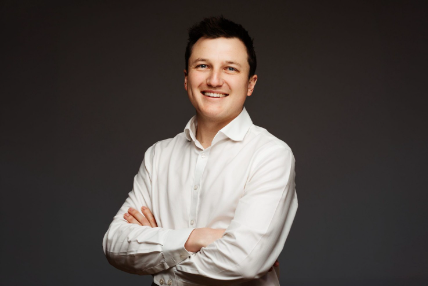
Callum is the head of climate and sustainability risk consulting at one of the world's largest insurance brokers. His job is to quantify the impact the changing climate is having on the planet and the risk to people's assets, businesses and livelihoods. More than anything, he has to work out what comes next. His is a role that has significantly evolved over the last decade to keep up with the rapidly changing global climate events.
Throughout our fascinating, if unnerving, conversation, Callum reflected on a profession that has truly moved from the margins to the mainstream. For my benefit, we discussed the landscape sector's increasingly central role in managing risk at every scale, from an urban street to entire regions.
We're all aware of our rapidly changing climate and in the UK the extremes of too much and too little rainfall have played out spectacularly over the last year (and continue to do so at the time of writing!). While we may experience the impacts in our everyday lives, are we really prepared? Not for what's to come, but what's already here.
One in Six: The Flood Risk Nobody is Talking About
The numbers are striking. According to the Environment Agency’s most recent modelling, when river flooding, coastal flooding and surface water flooding are combined, approximately one in six properties in England carries some form of flood risk. ‘Which is,’ says Callum simply, ‘A lot of properties.’
Surface water flooding - the kind caused by sudden, intense rainfall that often overwhelms drainage systems - is attracting particular scrutiny from insurers right now. The reason is simple atmospheric physics: more heat means more moisture held in the atmosphere and more energy generating more intense, concentrated downpours. What used to be more associated with continental Europe, the violent afternoon thunderstorm that dumps a month of rain in two hours, is an increasingly British phenomenon.
The London Tideway ‘super sewer’, completed at enormous cost, has not yet been tested by a sufficiently major event, but is ready and waiting. We considered just how long we might have to wait for that scale of rainfall – surely it's just around the corner… Meanwhile, the capital’s Victorian combined sewer infrastructure is largely inadequate for the rainfall intensities now being modelled. It’s one of the reasons Sustainable Urban Drainage Systems (SuDS), a suite of landscape-led approaches to managing water at source, are moving from planning aspiration to regulatory necessity.
The Insurability Question: A Ticking Bomb
Beyond the immediate flooding picture lies a slower, more structural crisis. Callum describes it in terms of two interlocking problems: affordability (can people pay what it costs to insure a high-risk property?) and availability (can they get the cover they need at any price?).
In the UK, a little-known mechanism called Flood Re has been quietly supporting the property insurance system for many years. Every insurer that offers homeowner insurance in the UK pays into the Flood Re scheme, which is designed to act as a backstop for retaining insurance to properties facing the most flood-exposed risks. Without it, premiums for properties in flood-prone areas could see significantly higher insurance premiums to cover for flood risk.
However, Flood Re is currently scheduled to end in 2038, which Callum notes could cause a significant impact to property insurance premium.
“There’s a risk that certain places, certain risk types, and particularly severe flood risk, could end up costing a lot more to insure than they currently do. And at some point, the question of whether something is even insurable comes into play.”
The international picture provides a useful preview. In California, for example, major insurers have withdrawn from wildfire-prone areas. Meanwhile Miami, where streets flood regularly at high tides, without a storm in sight, is also supported by a Florida state-backed insurance scheme of last resort for homeowners. These are not distant warnings; they are live experiences of what happens when the insurance market sees climate risk at scale. The UK, for now, remains relatively insulated, but the window could be finite.
The Problem with Nature: You Can’t Put a Beaver in a Model
Insurance risk models are built, overwhelmingly, around engineered infrastructure: often concrete flood walls, foundations and channel modifications. These are easy to quantify and model – an engineer can assess a concrete wall of a defined height, in a defined location, and flood risk calculations can be adjusted accordingly. Nature, however, is different. Softer, and more desirable in most instances, its impact is often much harder to model and evaluate.
Beavers, to take Callum’s favourite example, are being steadily reintroduced across the UK. Research from Exeter University and others shows they can dramatically reduce downstream flood peaks by creating complex, water-retaining wetland systems. Put bluntly, they’re experts at ‘slowing the flow’. But how do you plug a beaver into a risk model? They change hydrological systems dynamically, seasonally, and in ways that resist simple analysis. This same challenge applies to every other form of natural flood management, whether riparian woodland, salt marshes or upland peat bogs.
“Nature can deliver the same or equivalent benefits [as hard engineering]. But it’s very hard to put numbers behind it; to say, if you do this, you reduce risk by that amount.”
This is a problem the industry is beginning to look for answers on how to solve. Without being able to quantify the risk reduction that nature-based solutions provide, insurers cannot reflect risk improvements in landowners, developers or local authorities investing in nature. The financial signal that would accelerate widespread adoption simply doesn’t exist yet. Tools like i-Tree Eco, which assigns monetary values to individual urban trees based on their cooling, shading and water attenuation services, represent one approach. Natural capital accounting frameworks offer another. But the field is nascent, and Callum is candid about the gap: ‘We haven’t yet been able to nail it down.
Greening the City: What London is (and isn’t) Doing
London is, by many measures, a surprisingly green city, a legacy, as Callum notes with some amusement, largely attributable to Henry VIII’s preference for hunting close to home rather than any modern environmental foresight. But the capital’s existing tree canopy tells only part of the story. Planting new street trees in established urban areas is extraordinarily difficult, due to utilities infrastructure that makes it almost impossible to establish trees of meaningful scale in most locations.
Meanwhile Paris has spent a decade confronting this head-on. Tens of thousands of car parking spaces have been removed, dozens of streets pedestrianised, and extensive new planting installed, in preparation for a potential 50-degree summer. Oxford Street’s long-debated pedestrianisation, due to commence later this year, offers London a similar, if more modest, opportunity.
In the meantime, the retrofitting of SuDS into urban streets is gathering pace, albeit quietly. Walking through Finsbury Circus Gardens recently, Callum noticed the area had been discreetly redesigned with rain gardens, so that rainfall drains into the planted areas rather than the piped sewer system. I was impressed that anyone other than a landscape architect even noticed such a change!
Nature as an Asset Class: The Emerging Investment Case
One of the most intriguing ideas to emerge from Callum’s work sits at the intersection of investment theory and ecology: can nature be structured as a financial asset? The concept is straightforward in outline. If a nature-based solution delivers measurable public benefit (flood protection, water quality, carbon sequestration, biodiversity etc), can it also generate a financial return that makes it more attractive to private capital?
Early examples are beginning to emerge of UK Funds that have been set up to invest in nature-based schemes. With the right types of nature investments, there appears to be potential for these schemes to stack up on both a financial return basis and a risk reduction/nature benefit dimension.
What's Coming Next and Who's Paying Attention?
Callum leads a team of specialists - engineers, building physicists, climate scientists - and there is no shortage of young, enthusiastic climate talent looking to enter the sector. The cohort of sustainability professionals he encounters at client organisations is similar. This is both encouraging and revealing: the people most actively engaged with climate risk are, overwhelmingly, those who will live longest with its consequences.
The trajectory is clear: just five years ago, when asking a business what environmental risks it was exposed to, many might have struggled to articulate this clearly. Today, it is a boardroom priority, driven by a combination of extreme weather events, regulatory disclosure requirements and the very real possibility that insurance premiums may, sooner or later, make the risks difficult to ignore.
A fascinating example of shifting attention and changing behaviour originates in France. At least one major wine producer is considering how to systematically purchase plots of land in a corridor stretching from northern France up through England, anticipating the northward migration of suitable viticulture conditions as temperatures rise. Agricultural supply chain managers across multiple sectors (sugar, tomatoes, vanilla…) are conducting similar analyses, modelling where today’s marginal land becomes tomorrow’s prime growing region and investing accordingly. The insurer’s lens, it turns out, makes for surprisingly good long-term land use strategy.
My conversation with Callum potentially offers the most pragmatic case for the landscape profession’s growing centrality to the built environment: not a values argument, but a numbers one. I believe, and hope, we can embrace both - but the tide is turning (both literally and figuratively) and we must move at speed.
The risks are all too real, they are priced, and the invoice is coming due.