
#7 The Messy But Rewarding Business of Listening Well
In this issue, I had a chat with Stephanie Kerr, Chief Executive of BID Leamington in Royal Leamington Spa, for a conversation about the realities, challenges, and opportunities of community engagement in placemaking. Steph holds a First Class Honours Degree in Urban Planning and a Master's in Public Administration in which her dissertation focussed on board governance, diversity, and stakeholder representation in a placemaking context.
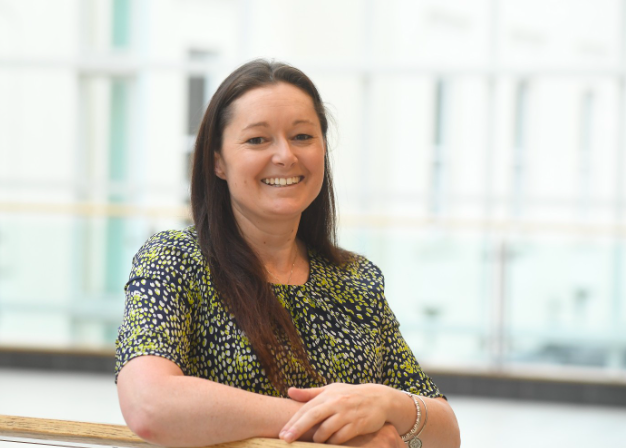
Our discussion covered everything from overlooked communities to survey design, the value of informal interaction, and emerging world of AI-assisted engagement. What ensued was an honest picture of some consultation gaps and ideas for what deeper engagement could look like. We both agreed this is only the very tip of the iceberg on this vast topic and welcome deeper dialogue.
Writing the Brief – the Who and the How?
Our conversation opened with a challenge that many in the placemaking sector will recognise immediately: even the best-intentioned engagement process can be constrained before it begins, by the brief itself. We agreed that when a project team comes predominantly from a single professional background, perspective or pool of experience, it inevitably shapes the questions they plan to ask and, crucially, the communities they think to include.
Steph was direct about this:
“The ‘how’ is always very important to me. Quite often I see a brief and think, that’s fine; however, how much time has been allocated and what methods have been identified to speak to this or that group that is often overlooked?”
And the challenge compounds itself since, by their very nature, overlooked groups can be hard to reach. The implication is significant for anyone commissioning engagement work: bringing in a diverse group of contributors early enough to genuinely shape the brief is not a luxury. It’s essential to the quality of what follows.
Who Has the Loudest Voice?
When formal engagement happens, who tends to show up? Steph observed that in smaller places, it’s often civic societies and long-standing community groups whose members are well-informed, articulate, and experienced in navigating public consultation. In Leamington, for instance, this may be the Leamington Society or local lobby groups, whose members have relevant specialisms.
However, other voices are harder to reach. The people who work in and support the retail and leisure sectors - often on zero-hours contracts, unable to work from home, earning too little to live in the town, and reliant on transport that does not always run at the hours they need – can be easily overlooked in formal consultation. And yet their perspectives on vital questions around car parking, bus routes, loading bays, disabled access, and night-time safety are hugely valuable – and they bring knowledge from interacting daily with the wider community.
Stephanie described one of her board members whose particular passion is considering bus users: who relies on public transport in this town, and what happens to them if we move, reduce, or redesign services? It’s the kind of question that sounds so simple yet cuts to the heart of equitable placemaking. In smaller towns, unlike cities, reliable and affordable public transport cannot be taken for granted, and the consequences fall hardest on those with the least flexibility.
Who Has the Loudest Voice?
When formal engagement happens, who tends to show up? Steph observed that in smaller places, it’s often civic societies and long-standing community groups whose members are well-informed, articulate, and experienced in navigating public consultation. In Leamington, for instance, this may be the Leamington Society or local lobby groups, whose members have relevant specialisms.
However, other voices are harder to reach. The people who work in and support the retail and leisure sectors - often on zero-hours contracts, unable to work from home, earning too little to live in the town, and reliant on transport that does not always run at the hours they need – can be easily overlooked in formal consultation. And yet their perspectives on vital questions around car parking, bus routes, loading bays, disabled access, and night-time safety are hugely valuable – and they bring knowledge from interacting daily with the wider community.
Stephanie described one of her board members whose particular passion is considering bus users: who relies on public transport in this town, and what happens to them if we move, reduce, or redesign services? It’s the kind of question that sounds so simple yet cuts to the heart of equitable placemaking. In smaller towns, unlike cities, reliable and affordable public transport cannot be taken for granted, and the consequences fall hardest on those with the least flexibility.
“When you bring us all into one room, we all get to hear from one another. The relationships that make it a safe space for genuine listening and sharing often aren’t there in a one-off workshop.”
The model she described, of a diverse group meeting throughout the year, representing different parts of the community, building relationships as well as addressing specific issues, is not new. The Institute of Place Management and others have long advocated for healthy place stewardship built on strong stakeholder coalitions (the kind facilitated through Urban Rooms).
The Invisible Workforce: Delivery Riders and Drivers
One of our conversation’s most striking threads concerned a group who are physically present on our high streets every single day, yet almost entirely absent from positive placemaking conversations: the delivery riders and drivers who power both our evening and daytime economies.
“Those riders represent 30 to 40% of many evening economies’ turnovers and are now increasingly serving retail also. They are fundamental to the viability of these businesses.”
Steph shared that one business she had spoken to recently attributed 42% of its turnover to Uber Eats, Deliveroo, and similar platforms. Yet far from being seen as a vital link in our struggling hospitality sector, we’re both aware that these people are often moved on as they ‘clutter the place up’ and there are strong feelings about parking on pavements, bikes, routes, speeds, and behaviours.
This framing, Steph argued, is problematic, though the issues are real. Delivery workers are typically in our town and city centres for ten to twelve hours a day. They need to charge their bikes and phones, access toilets, rest, and hydrate. Many are on precarious gig-economy contracts with limited employment protections. The shift from petrol bikes to cars and now to electric bikes and scooters also raises urgent questions about licensing, infrastructure, and safety that policy makers have yet to meaningfully address.
For Steph, the message is clear: mobility hubs and public realm schemes need to address and embrace the needs of this community. Delivery workers are not a nuisance to be managed; they’re a constituency to be heard and planned for and, like many thoughtful accessibility adjustments, the measures will likely benefit everyone.
The Engagement Ladder: Steps and Considerations
Steph outlined a broad framework for how engagement typically unfolds: awareness raising, informing, consulting, refining, delivering, and (ideally) monitoring and reviewing. She observed that in practice, the ‘informing’ stage can be skipped over very lightly and we need to be acutely aware of people’s different circumstances when planning for change.
Generally, awareness raising ie telling people something is happening and inviting their participation, gets plenty of attention, often via sustained social media campaigns. But informing: genuinely sharing the full picture, including the assumptions, trade-offs, the aspects already considered, and the reasons behind draft proposals, is not always clear and takes time to understand. It represents an opportunity to enable people who arrive at engagement opportunities to look beyond personal perspectives and engage with the complexity of a town or city centre ecosystem.
We discussed a local example: a proposal to relocate bus stops from a high street to back streets. ‘Before and after’ visualisations of a street with and without buses always looks like an improvement; most people seeing it would agree. But without the informing stage, some important considerations are not signposted.
“What happens to the basket spend at businesses adjacent to bus stops when the bus stop moves? What does relocating a bus stop to a back street say about how we value bus users? Are those back streets safe, at all hours, for people waiting alone who may be young or vulnerable? Did we ask enough actual bus users?”
These thoughts shifted perspectives and introduced new design considerations.
We also discussed the value of providing evidence-based information. She cautioned that when presenting data, the context behind it is also very important – and this needs to translate into survey design. Data around footfall, vehicle use, cycling, parking and local spending research is invaluable, however when used to support an argument for change, it risks being misleading if it’s presented without the nuance of local circumstances. Also, assumptions need to be tested in surveys, so we continue to update the local evidence base and address local needs.
For example, in Leamington Spa, housing affordability means many retail and leisure sector workers cannot live close enough to walk or cycle, and bus services are irregular, making car use a practical necessity rather than a lifestyle choice. This means it’s important to ask where people originate from in public realm and mobility surveys. Her call is for more sharing of place-based evidence, easier access to local data, and recognition that survey design is a fundamental skill in its own right (as expressed in a previous newsletter with Lynda Thompson).
Given the time and money invested in reaching the consultation stage, good engagement means being transparent about the agenda, sharing the reasoning, considering different perspectives, and trusting communities to engage with complexity.
Creative Engagement and the Role of Informal Interaction
Perhaps the most energising part of our conversation explored alternatives to the survey-and-workshop model. Steph drew on her BID’s lantern-making workshops: these are free events held across five weekends every Christmas, bringing up to 500 families together. The genius of the format is not just the activity itself, but the fact that participants share tables, so that those who don’t know each other before they arrived find themselves making things together, talking, and eventually parading through the town with their lanterns.
This, Stephanie suggested, is an opportunity for engagement. Not formal enough for some scenarios perhaps, but the informal interactions between people that begin to build the social fabric on which more structured conversations can rest.
In terms of placemaking, the opportunity exists to weave more of this kind of creative, looser engagement into formal processes. Perhaps temporary installations that invite people to experience a proposed change before it is permanent; public art that prompts new ways of seeing familiar streets; tactical urbanism that tests ideas cheaply and reversibly. Funding for this kind of work is inevitably limited, but the case for it is strong.
Technology, AI, and Keeping Things Human
Steph also touched on the emerging role of technology in engagement. For example, as an experiment, she recently ran publicly available social media comments on a local consultation through an AI sentiment analysis tool and found it genuinely useful. She was able to identify the most common questions or concerns and use these to brief the team running public workshops before they took place. The caveats seemed clear: the commenters had not been involved in the ‘informing’ stage, so many were responding emotionally to an incomplete picture. But the signal was still valuable.
More broadly, Steph is curious to explore AI’s role in engagement and placemaking. Her instinct is that it can help, and she cites some incredible visualisation, co-design and analysis tools, but also feels these need to be accompanied by a strong moral compass, as the human touch is critical.
Her closing thought was characteristically grounded: whatever tools are used, the goal is to take communities genuinely on the journey. There’s a real need for approaches that are creative, informative, and inspiring. And crucially, engagement that feels like another drain on already stretched communities – leading to raised anxiety without greater understanding or resolution – is a lost opportunity, however well-intentioned.
A Note on Fatigue - and Hope
Steph was keen to acknowledge the context in which engagement work is happening: significant change, stretched resources, and communities carrying very real worries. When placemaking professionals, businesses, or the communities they serve are fatigued, she observed, creativity and hope run dry, and that has real implications for the quality of the responses received and the conversations initiated.
That isn’t a reason to disengage. It’s a reason to be thoughtful about how engagement is designed and honest about timescales.
The opportunity, she concluded, is significant. Engagement around our places is one of the few remaining contexts in which people with completely different perspectives can encounter each other, hear about aspects they had not considered, and begin to mend the divisions that life in separate bubbles tends to deepen.
That’s not a small thing. It’s exciting, and worth doing well.