
#9: Built to Last or Built to Bin? Public Art’s Sustainability Blind Spot
For this latest issue, I had a chat with Sarah A. Collicott, FRSA , an immensely experienced public art consultant (and originally a schoolfriend!) whose career spans the globe and is now based in Saudi Arabia. Sarah is Director of ConstantineKSA and heads up their arts management team, Constant Art.
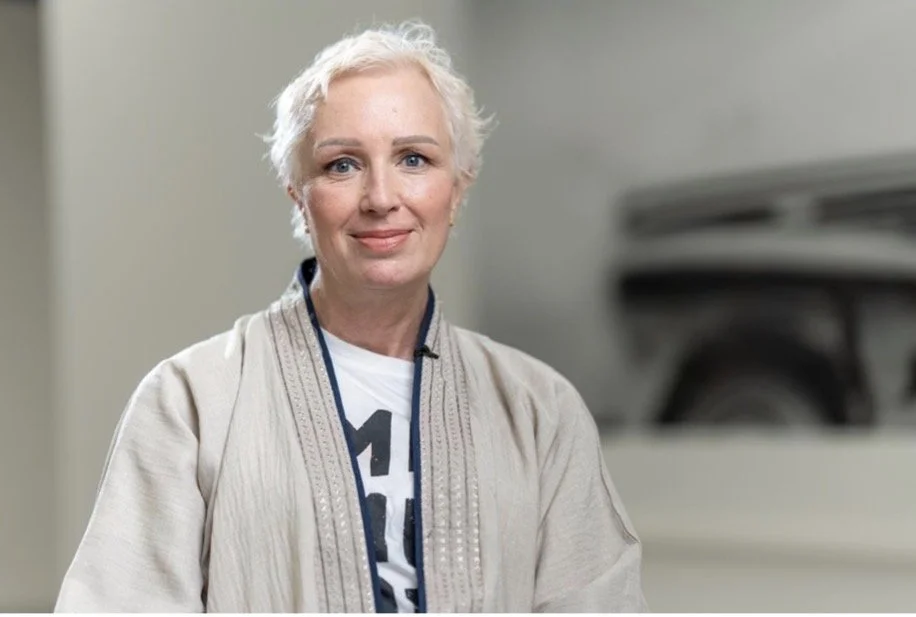
We had a truly insightful conversation about a question I have rarely, if ever, heard asked: how sustainable is public art? We talked about the gap between strategy and delivery, the waste behind temporary installations, the evidence the sector has never collected and what might change if sustainability was written into the brief rather than bolted on at the end.
We barely scratched the surface of this huge topic and welcome a wider conversation.
Why Public Art Warrants the Scrutiny
Sarah’s starting point was people. For many, a sculpture in a street or square is their first, and sometimes only, encounter with art. While they might never choose to walk into a museum or gallery, they may walk past something that catches their eye and stop for a closer look. That's the key value of public art, and also the responsibility.
Done well, it shapes how a place works. It links with wayfinding, encouraging people to look up, keep moving or pause, often encouraging ‘dwell time’. The white lines of Superkilen in Copenhagen, a project Sarah has long used as an exemplar (and one I coincidentally visited a couple of weeks ago), literally guide you around. Carlos Martinez Architekten’s red City Lounge in Saint Gallen carpets an entire street, cars included. Urs Fischer’s monumental teddy bear in Doha’s Hamad airport is a landmark everyone passing through will remember; it’s endlessly photographed, the ‘Kodak moment’ reborn by Instagrammers. Anish Kapoor’s Cloud Gate in Chicago has become a tourist destination in its own right.
Public art can also tell local and cultural stories and it needn’t (maybe shouldn't?) be the ubiquitous sculpture: for instance art etched into a wall or set into paving might not even require a separate line in the budget. However, it does need explaining; we’ve both encountered projects that make no sense until they’ve been researched. And genuine engagement also matters. ‘Involving the community’ too often might mean encouraging residents to spend an afternoon collecting stones for an artwork, whereas artists like Neville Gabie (artist in residence on the London 2012 Olympic Park), work deeply with people. For Sarah, it’s all about the place, and the people in that place.
Sustainable on Paper, Missing on Site
Sarah has seen the same pattern globally. Organisations want to be able to say they follow sustainable policies and processes, and the language appears readily in strategy documents.
“The word is freely used, perhaps at strategy level, but at delivery level it doesn’t come through. Often it’s been value engineered out, is no longer referred to and, importantly, there’s no clear method of evaluation.”
The reasons are familiar to anyone working in the built environment. Every commission is up against a budget and a timeline, both invariably tight, and nobody wants to add cost or complexity to a project. Decisions can pass slowly up through layers of governance, in the UK as much as anywhere, and most people are a little too nervous to put their head above the parapet. There is a clear evaluation process for selection, covering concepts such as artistic and cultural relevance, but the steps to assess sustainability are not yet embedded, or sufficiently qualified or quantified for public art. As a result, sustainability tends to get lost amid concerns that it is another hurdle to overcome, potentially bringing additional cost or requiring an extension to a timeline that is already constrained.
Procurement systems aren't always supportive, and while tenders inevitably raise questions about sustainability, they can often be answered by anyone using AI to generate a paragraph to fill the box. Sitting under the technical score, and therefore somewhat qualitative in nature, nobody seems quite sure what good looks like.
Temporary Art, Lasting Legacy
Temporary works were a big part of our conversation, and the same challenge is shared by festivals and events worldwide. The Middle East has a particularly vibrant programme of temporary projects, Sarah explained, because they can happen quickly. There is an honourable desire to get things moving, showcase the arts scene and local artists, and attract both international artists and a wide international audience. Art pieces are often fabricated, shipped and installed in the final few weeks before a project opening, due to tight timelines and the complexity of unique artworks.
“Major projects that are monumental in scale might be on display for a matter of weeks. Materials are rarely recycled or reused; the work is generally returned to the artist or potentially disposed of.”
Sarah also challenged the comfortable language of ‘found objects’. On one project, the approach was simply to go out and gather what people had thrown away and put it into the work. That's repurposing, not recycling and genuine recycling relies on specialist facilities, which are still developing in many markets. This thread reminded me of the post-COVID parklet installations and outdoor dining here in the UK where we saw the hugely imaginative reuse of streets, but what happened to all that marine ply and furniture that nobody needed two years later? At the scale we witnessed, it’s equally hard to defend.
Sarah pointed instead to Twist, Ackroyd & Harvey’s landmark sculpture at Cabot Circus in Bristol. The tower was clad in thin dark slates that were a waste material from the roofing industry and lit by solar and wind power, demonstrating how reuse can be designed into a work from the outset.
Writing Legacy into the Brief, Not the Appendix
If one message ran through our whole conversation, it was timing. In her strategic work, Sarah will map a clear timeline for any artwork, from masterplan through to delivery. Planning for temporary work should go further. Proposals need to set out at concept stage how it will be removed, relocated or disposed of, and assessments could score proposals more highly where there is a thorough plan for where the work could ultimately go.
Saudi Arabia already offers a model. At Riyadh Art’s Tuwaiq Sculpture symposium, artists carve their works live from locally sourced granite and reclaimed metal, and the 25 sculptures created in 2026 are now joining the city’s permanent collection, installed in streets and parks across Riyadh. Legacy is also being written into the public art strategies of the country’s giga-projects from the outset.
“When you commission a temporary artwork, build its afterlife into the planning from the start. Could it tour? Could it be repurposed, or relocated to a new home where another community or city can enjoy it?”
There is a precedent from my own world of landscape. Since 2023, the Royal Horticultural Society has mandated that all show gardens, such as those at the Chelsea Flower Show, must be relocated or repurposed for a legacy/community project. So now, designers must build legacy into their submission from the start. Gardens are rebuilt throughout the UK, often at a hospice, hospital or school, with the cost of relocating them included in the initial brief.
Sarah’s point about events was simple: art biennials, wherever they are held, don’t arrive as a surprise (the clue is in the name!). The dates are known years ahead, so why start planning six months before opening? A longer lead-in could also bring opportunities to work with younger artists and support the wider creative ecosystem. Venues can play their part too. The first Islamic Arts Biennale in 2023 was staged beneath the canopy of SOM’s 1981 Western Hajj Terminal in Jeddah, giving an existing landmark new life, and the Diriyah Biennale Foundation has made its home in eight refurbished warehouses in Riyadh’s JAX district.
The Evidence Nobody Is Collecting
Sarah’s next big theme was data. Major new developments, especially when starting from a relatively blank sheet, are an opportunity to gather data that doesn’t exist anywhere: on materials, environmental performance, and social and economic impact (a form of post occupancy evaluation if you like - a common theme in this newsletter!). Over time, that could become the benchmarking and evidence that nobody has ever produced. But it just doesn’t happen because, again, people fear increases in cost and time.
This absence hurts the discipline. Sarah recalled a project we both know in Exeter, where the artwork attracted so many visitors that the developer opened a café. This is an important example of one of the rare occasions where a client can calculate the ROI of a project and its impact. Unfortunately, anecdotes like these rarely become measured outcomes.
So what should we measure? Maintenance is an obvious start, because it is so often missing. Commissions generally lean on material warranties of 12 months, occasionally up to five or ten years, and then inevitably costs arrive that nobody had planned to carry. Landscape has exactly the same problem: there is rarely the budget for management and when owners change, or a local authority changes political colour, priorities inevitably change with them, often impacting the public realm.
Bronze, Brutalism and the Question of Taste - Who Decides What's Awful?
Permanence raises its own questions. A bronze statue that stands for centuries could be argued to have a tiny whole-life cost and whole-life carbon value. But between weeks-long installations and centuries-old bronzes lies a whole spectrum that is rarely discussed.
Taste complicates it further. Sarah has heard it suggested, in more than one country, that a new programme of commissions could be a chance to clear away older work considered ‘awful’. She disagrees. Taste and fashion change over time, and the same logic would once have swept away brutalist architecture.
Jeddah shows what the alternative looks like. From 1974 the city commissioned over 400 public artworks, including pieces by Miró, Calder, Arp and Vasarely. When salt winds off the Red Sea took their toll, the sculptures were restored rather than removed. Saudi artists were trained in their maintenance and in 2013 a selection found a new home in the open-air Jeddah Sculpture Museum on the Corniche.
Who Holds the Lever?
We’re both clear that change and direction have to come from the top. In the UK, much public art is driven by Section 106 and, without it, many approvals would never be signed off. In Saudi Arabia, culture sits at the heart of Vision 2030 as a strategic pillar. Either way, unless the client is fully bought in and understands the value of public art, nothing will change.
There are signs of movement. Local authorities in the UK must now measure social value in their procurement, and many built environment awards are starting to apply sustainability criteria across every category rather than in a single dedicated one, even if much of the evidence remains qualitative.
Will public art find its own place? With ESG reporting now routine, clients can hardly avoid the subject, yet the perceived cost of long-term of whole-life thinking so often remains the sticking point at the outset of a project. But as materials become scarcer, more expensive and harder to source, the economics will surely shift anyway. And don't all artists or designers know that a constrained brief, whether by budget, scale or materials, often brings out the most profound creativity?
Saudi Arabia, with its ambitious cultural programme under Vision 2030, and a wealth of new work being commissioned, has a real opportunity to build in thinking-specific, rather than site-specific, creativity from day one. But wherever a project is based, the same questions belong at the very start: what is it made of, how long should it last, who will maintain it, where will it go and how will we know it worked?
Ask them early enough, and sustainability stops being a word in the strategy and becomes part of the art itself.